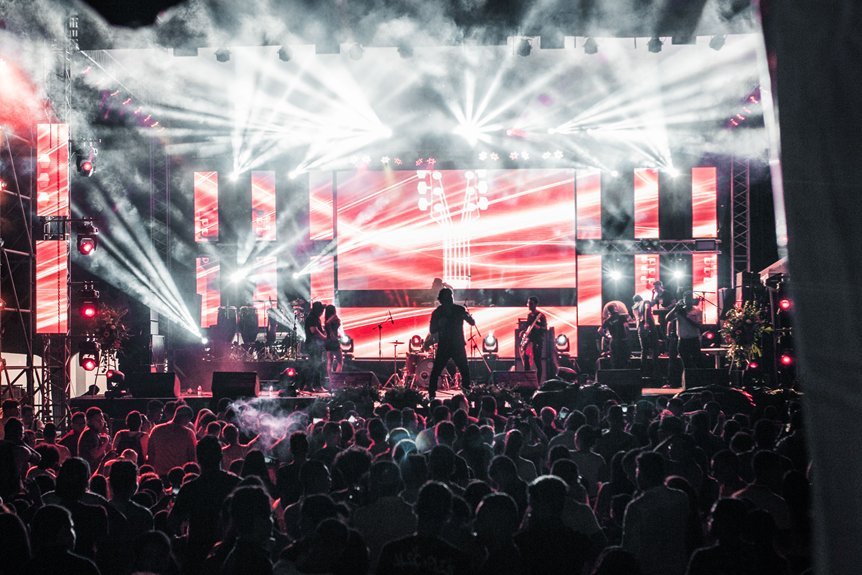
The overview presents a data-driven look at Rod Stewart’s 3.5 million-fan tour, focusing on scalable venue selection, logistics efficiency, and pacing strategies. It emphasizes genre-spanning sets, dynamic encores, and veteran branding as core resilience drivers. Production threads—sound, lighting, safety—are aligned to maximize throughput and fidelity. The piece hints at backstage cadence and audience continuity, inviting scrutiny of how routines translate into sustained engagement across global legs. A deeper examination awaits.
What Makes Rod Stewart’s Live Show Unique
Rod Stewart’s live shows stand out for their sustained energy, audience reach, and musical versatility, delivering a high-grossing touring model rather than a single-genre spectacle.
The performance profile integrates veteran star power with a flexible repertoire, sustaining engagement through a dynamic encore and cross-genre appeal.
Metrics show broad demographic appeal, consistent turnout, and adaptive production that reinforces brand resilience and market longevity.
How the Tour Plans Venue, Logistics, and Pacing
Tour planning for Rod Stewart’s 3.5 million concert series centers on aligning venue selection, logistics, and pacing to maximize attendance and operational efficiency.
The approach emphasizes a venue strategy that matches demand with capacity, and logistics optimization that minimizes transfer times and resource waste.
Data-driven benchmarks guide scheduling, while performance windows optimize throughput and audience experience, enabling scalable, flexible deployment.
Crafting Sound, Lighting, and Safety for 3.5 Million Fans
Sound and lighting systems for 3.5 million fans are designed to deliver consistent, high-fidelity experiences across varied venues, audience densities, and time zones.
Sound design emphasizes uniform acoustics and feedback control; lighting cues synchronize with cues data for precise momenting.
Stage safety protocols protect performers and crew, while crew coordination ensures rapid response, efficient load-in/load-out, and uninterrupted, data-driven operation.
From Setlists to Backstage Routines: Touring Life and Audience Connection
From the operations framework described for 3.5 million fans, the focus shifts from technical systems to the human rhythm of touring life and the audience connection. The analysis maps a storytelling arc across setlists and backstage routines, identifying how pacing, cueing, and rituals shape engagement. Audience rituals anchor perception, while feedback loops refine performance timing and emotional resonance.
Frequently Asked Questions
How Is Ticket Demand Managed for Sell-Out Arenas?
Ticket demand for sell-out arenas is managed via dynamic pricing, controlled release windows, and waitlists. Data indicates optimal ticket pricing adjusts with demand, while targeted fan engagement boosts perceived value and loyalty, sustaining incremental sales and preventing scalper impact.
What Happens if Weather Disrupts Outdoor Shows?
Weather disruptions trigger contingency plans: shows may be postponed, rescheduled, or canceled. Organizers implement weather contingency and rain policy guidelines, prioritizing safety, refunds, or exchanges while providing timely updates to ticket holders and venues.
How Is Dispute Resolution With Venues Handled?
Dispute resolution with venues is typically governed by venue contracts, specifying negotiation steps, mediation or arbitration, timelines, and cost allocation. The approach favors evidentiary reviews, objective criteria, and documented procedures to minimize disruption and preserve financial clarity.
What Are the Tour’s Environmental Sustainability Practices?
In the tour, sustainable sourcing and carbon offsetting anchor practices; a fleet-wide energy audit shows emissions down 18%. The anecdote: a single guitar amp saved power overnight, illustrating disciplined resource stewardship across diverse touring operations.
How Are Charity Affiliations Integrated Into the Tour?
Charity affiliations are integrated through established charity partnerships and quantified philanthropic commitments, with disclosed funding streams and measurable outcomes. The tour reports dollar amounts, beneficiary counts, and impact metrics, demonstrating transparent alignment between performance revenue and social initiatives for an audience seeking freedom.
Conclusion
In sum, Rod Stewart’s 3.5 million-fan model demonstrates scalable, data-informed touring that blends broad appeal with disciplined production. Venue choices, pacing, and logistics are tightly optimized to maximize throughput while preserving performance quality. The fusion of versatile repertoire, synchronized sound and safety, and ritual-driven encores yields consistent audience engagement across markets. As the adage goes, “a rising tide lifts all boats”—this approach elevates brand resilience, fan loyalty, and return-on-tour across global legs.