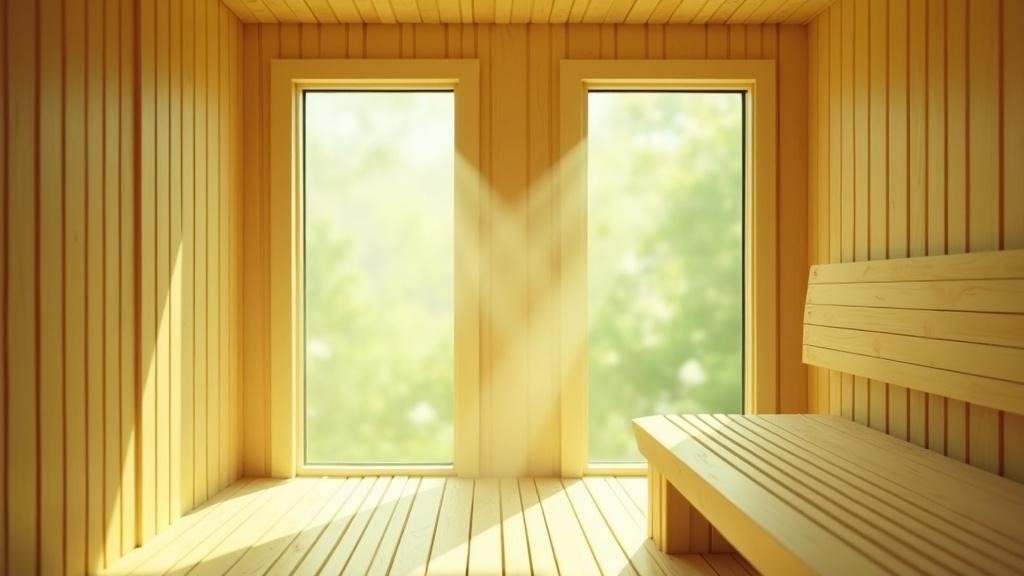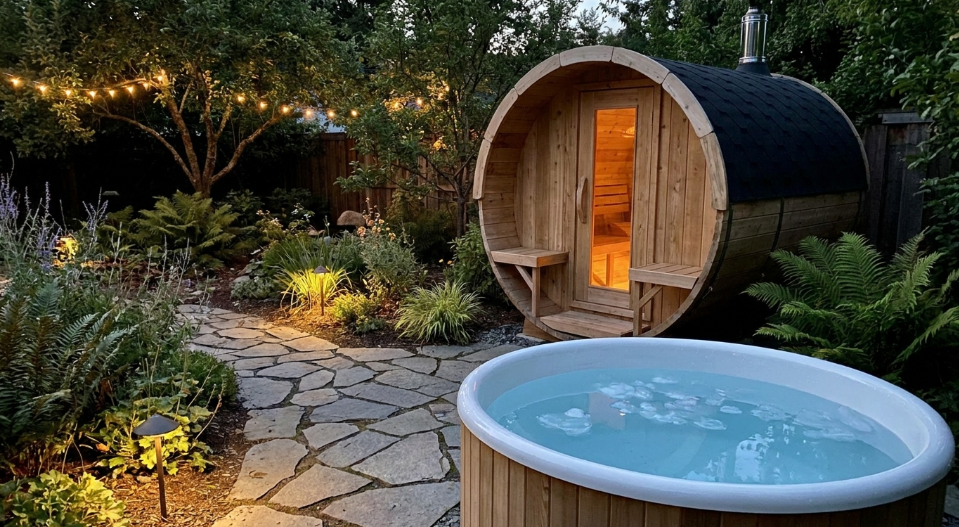
Cedar and heat-treated hemlock are the two most common wood choices for an outdoor sauna, and the decision usually comes down to budget versus long-term upkeep. Cedar costs 20 to 40 percent more but naturally resists rot, insects, and warping outdoors with less frequent refinishing. Heat-treated hemlock costs less, holds heat efficiently, and looks nearly identical once installed, but its outdoor durability depends entirely on how well the heat-treatment process was done rather than being a property of the raw wood.
What actually makes cedar different at a material level?
Western red cedar contains natural oils and compounds called thujaplicins that give the wood built-in resistance to rot, mold, and wood-boring insects without any chemical treatment. That matters more outdoors than indoors, since an outdoor cabin sits through rain, snow, and long stretches of humidity that an indoor unit in a conditioned garage never experiences. Cedar is also naturally low in resin, so it does not weep sap onto benches the way some pine species can when hot. The tradeoff is price: cedar has been in high demand for outdoor building projects generally, from decking to fencing, which keeps it consistently more expensive than most alternative softwoods.
What does the heat-treatment process actually do to hemlock?
Heat-treated hemlock starts as a plainer, less rot-resistant softwood and gets baked in a controlled, oxygen-limited kiln at high temperatures, which changes the wood’s cell structure and reduces its ability to absorb moisture. Done well, this brings hemlock’s outdoor performance reasonably close to cedar’s for a lower price. Done poorly or inconsistently, which does happen with lower-cost suppliers cutting corners on treatment time or temperature, the wood can behave more like untreated softwood once it is outside and exposed to a full season of weather. This is the main reason buyers comparing hemlock cabins should ask specifically how the treatment was performed rather than assuming all “heat-treated” wood is equivalent.
How do the two hold up after a few years outdoors?
Cedar tends to gray evenly and predictably as it weathers, a look many owners actually like and choose to leave unsealed rather than fight. Left completely unsealed, though, both woods will gray over time; the real performance difference shows up in resistance to cupping, checking, and soft spots rather than color alone. Heat-treated hemlock, when the treatment was done properly, resists moisture uptake well for the first several years, but owners in wetter climates report needing to stay more consistent with resealing than cedar owners do, since any treatment does wear down under continuous UV and moisture exposure over a decade of ownership.
Does either wood affect how hot the cabin gets or how it feels to sit on?
Both are low-density softwoods, which is exactly why they are used for sauna interiors instead of oak or maple: dense hardwoods can get uncomfortably hot to the touch at typical sauna temperatures, while cedar and hemlock stay touchable even on a fully heated bench. Cedar has a slight edge in insulating feel because it is marginally lower density, but the practical difference between the two on comfort alone is small enough that most people cannot tell blindfolded. Where the woods diverge more noticeably is scent: cedar carries a distinct aromatic smell that some owners specifically want and others find too strong, while heat-treated hemlock is close to neutral.
Is one worth the price difference for a backyard build?
For a unit that will sit outside in a wet or snowy climate and see heavy year-round use, cedar’s lower maintenance burden over a 15-plus-year lifespan can offset its higher sticker price. For a milder, drier climate, or a household that is comfortable staying on top of resealing every year or two regardless of wood type, heat-treated hemlock is a reasonable way to get a similar look and comparable heat performance for meaningfully less money. Comparing listings side by side helps here, since pricing between the two materials varies by retailer; SweatDecks and a handful of other specialty sellers post both cedar and hemlock models with the wood grade specified, which makes an apples-to-apples comparison easier than shopping by photos alone.
Does the wood choice change what the health research says about sauna use?
No, and this is worth being direct about. The research tying regular sauna use to cardiovascular and other health associations is built around heat exposure, frequency, and duration of sessions, not the species of wood the cabin happens to be built from. A cedar cabin and a well-built hemlock cabin heated to the same temperature deliver the same physiological heat exposure. Wood choice is a durability and budget decision, not a factor in the outcomes described in the sauna literature, and treating it otherwise overstates what the studies actually measured.
How do the two woods compare on interior use, not just the exterior shell?
Many cabins mix materials, using cedar or hemlock for the exterior shell while the bench slats and backrests are chosen separately for how they feel against skin at sauna temperature. Cedar’s slightly lower density gives it a marginal edge staying cool to sit on, but the more noticeable interior difference is scent: a cedar-lined cabin carries a distinct, resinous smell that intensifies as the wood heats, which some households consider part of the experience and others find overpowering in a small space. Hemlock interiors run close to neutral, which some buyers specifically choose if they plan to add their own aromatherapy oils or scented steam without the wood’s own smell competing. Neither preference is right or wrong; it comes down to whether you want the wood itself to be part of the sensory experience.
What about long-term structural movement in each material?
Wood expands and contracts with humidity and temperature cycling, and an outdoor sauna experiences more of both than an indoor unit ever will. Cedar’s natural oils help it resist the kind of moisture uptake that drives swelling and shrinking, so joints and panel seams tend to stay tighter over a decade of seasonal cycling. Heat-treated hemlock, because the treatment process itself reduces the wood’s moisture absorption, also performs reasonably well here, though buyers should ask whether a given cabin uses hemlock treated to a recognized standard or a lower-cost process with less consistent results. A cabin with visibly gapping panel seams after only a couple of winters is usually a sign the wood, or the treatment behind it, was not up to the specific demands of full outdoor exposure.
Frequently Asked Questions
Is cedar or heat-treated hemlock better for an outdoor sauna? Cedar naturally resists rot and insects with less refinishing, but costs 20 to 40 percent more. Hemlock costs less and performs well if the heat treatment was done properly.
Does heat-treated hemlock rot outdoors like untreated wood? Properly treated hemlock resists moisture and decay reasonably well, though not quite as well as cedar’s natural oils long term, and quality depends on the treatment process.
Which wood stays cooler to the touch on the benches? Both are low-density softwoods that stay comfortable at sauna temperatures; the difference between them here is minor.
Does the wood species change the health effects of using a sauna? No. Research on sauna use and cardiovascular associations is tied to heat exposure and frequency, not the wood species used.
References
- Cardiovascular and Other Health Benefits of Sauna Bathing: A Review of the Evidence, Mayo Clinic Proceedings, 2018
- Effects of heat and cold on health, with special reference to Finnish sauna bathing, American Journal of Physiology, 2018
- Benefits and risks of sauna bathing, The American Journal of Medicine, 2001